
A turnkey contract moves the design responsibility to the supplier, and that transfer changes the preparation work that you, as a recycling company owner or as a utility asset manager, must complete before mobilization. A turnkey PV module recycling project preparation phase confirms the input material, the site conditions, the utility supply and the permits. The turnkey PV recycling solution plant then arrives as a coordinated package, and the package includes mechanical equipment, electrical control and commissioning service. Preparation quality determines whether the facility reaches its rated output during the first month of operation.
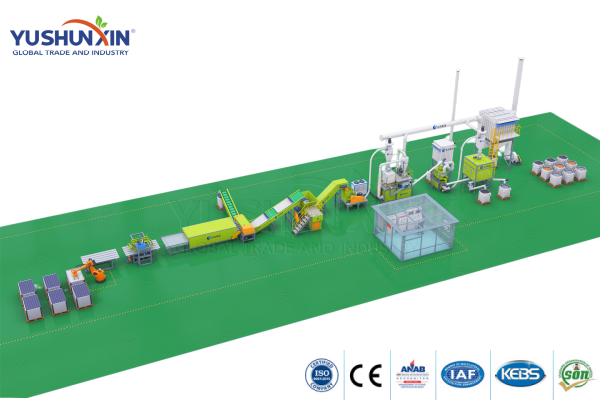
Which preparation steps come first before a turnkey PV module recycling project starts?
The first step collects module samples and documents their composition, because frame type, glass thickness and cell technology change the process configuration. The second step defines the annual intake and the storage capacity that the site requires, and that definition fixes the building size. The third step confirms the electrical supply, the water supply and the compressed air demand of the planned equipment. The fourth step reviews the permit pathway with the environmental authority, because the air emission and wastewater conditions shape the final design of the line.
Which site conditions does a turnkey PV recycling plant require?
The site needs a level floor with a load rating that supports the crusher, the thermal chamber and the separation modules. A turnkey PV recycling plant planning layout also reserves space for incoming module storage, a covered area for the dismantling table and a separate bay for outgoing fractions. Access for a container truck and a forklift keeps the logistics cost inside the plan. Your engineering team confirms drainage, ventilation and fire protection, because those systems support the operating permit of the facility.
Which processing equipment arrives with a turnkey solar panel recycling line?
The standard package includes a dismantling table, a frame removal press, a thermal delamination unit, a crusher, a vibrating screen, an electrostatic separator, a dust collector and a control cabinet. Each item of processing equipment carries a defined capacity, and that capacity chain determines the throughput of the whole plant. Treatment machinery with quick release wear parts shortens the maintenance window that your operators schedule each quarter. Your project team also reviews the spare part list during preparation, because spare part availability protects the uptime guarantee.
How do you prepare the operating team before commissioning?
Operator training starts before the equipment arrives, because the team that understands the process flow follows the commissioning sequence faster. Your supervisors study the mass balance, the temperature curve and the safety interlocks during that preparation period. A PV module recycling investment budget includes training, laboratory instruments and the first set of consumables, and that inclusion avoids a slow start. A solar panel recycling project preparation checklist keeps every task visible, and that checklist gives your management a weekly progress view.
Conclusion for recycling companies and utility asset managers
Preparation converts a turnkey purchase into a working plant, because the supplier delivers equipment while your team delivers the site, the permits and the people. A PV recycling technology provider that shares drawings early and supports the permit file reduces the gap between shipment and first production. The crystalline silicon wafer that dominates today’s modules also shapes the recovery value of the glass and silicon fractions. If your team needs a preparation reference for the next project, you can learn more about https://www.spdsx.com/product/solar-panel-recycling-line/ before the kick-off meeting.