
Public authorities that own battery collection schemes face a double obligation, because they must satisfy environmental targets and they must justify every item of spending. A public black mass recovery project answers both obligations when the authority documents material recovery and financial performance in one report. You, as a municipal programme manager or as a development finance analyst, compare the social return with the financial return before the council approves the investment. The public black mass recovery project also creates technical employment, and that employment strengthens the political case for the facility.
Which indicators separate social and financial returns in a public black mass recovery project?
Social indicators include tonnes diverted from landfill, local jobs created, worker safety records and the reduction of transport emissions. Financial indicators include capital cost, operating cost, revenue from copper, aluminium and black mass, and the net present value of the scheme. Your analyst presents the two indicator sets side by side, because a single combined score hides the trade-offs. A black mass recovery ROI analysis that separates the two groups gives the council a transparent basis for the decision.
Which processing equipment affects both indicators?
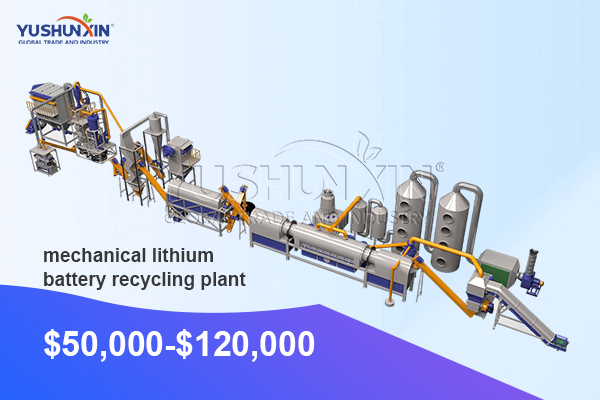
The discharge machine, the dismantling station, the shredder, the hammer mill, the density separator and the dust collector influence both the recovery rate and the workplace environment. Processing equipment with enclosed transfer points protects operators from dust exposure, and that protection appears in the social indicator set. Treatment machinery with high recovery efficiency increases the saleable output, and that output appears in the financial indicator set. The battery discharge and dismantling process that your authority selects therefore changes both columns of the report.
How does a public authority measure landfill diversion and job creation?
The authority weighs incoming battery packs and outgoing fractions every month, and the difference between the two figures documents the diversion rate. The human resources department records the number of technical posts created and the training hours delivered to each operator. Your environmental office then calculates the avoided transport distance and the avoided landfill volume. That combined record allows the authority to report progress against national recycling targets without commissioning a separate study.
How do you build the financial model for a public battery recycling project?
The model starts with the collection forecast, because the volume of collected packs determines the utilisation rate of the plant. A battery recycling project financial model then adds gate fees, material revenue, labour cost, energy cost and maintenance reserve. Your finance team tests the model with three price scenarios for black mass, and that test shows the range of the debt service capacity. The authority then selects the financing mix that keeps the service affordable while protecting the maintenance budget.
Conclusion for public authorities and development financiers
A public battery project earns support when the social benefit and the financial result remain visible and verifiable. A battery recycling project partner that supplies mass balance data, operator training and commissioning records helps the authority document both sets of results. The circular economy framework connects the collection scheme with the industrial recovery step, and that connection strengthens the case for long-term funding. If your programme office needs a technical reference for capacity and cost, you can learn more about https://www.sxlbp.com/products/lithium-battery-recycling-machine-cost/ before the next budget session.