
Recycling companies that already process battery packs often face a queue of material instead of a shortage of customers, and that queue signals a capacity limit inside the plant. The battery material recycling line capacity depends on the slowest step of the process rather than on the rated capacity of the largest machine. You, as a recycling company manager or as a plant engineer, identify that limiting step before you order additional equipment. The battery material recycling line capacity then grows through targeted upgrade rather than through a complete replacement of the facility.
Which design factors set the capacity of a battery material recycling line?
The feed preparation stage sets the first limit, because packs that arrive with heavy steel casing slow the dismantling station. The shredding stage sets the second limit, and that stage depends on the knife geometry and on the discharge opening. The drying and separation stage sets the third limit, and that limit appears when the moisture of the feed rises. Your process engineer measures the cycle time of each stage for one week, and that measurement reveals the true constraint of the line.
Which processing equipment limits throughput in a battery recycling plant?
A single shredder often limits output when the plant receives large format packs, because the machine stops for every oversized module. The screening unit limits output when the screen area is small, because fine material slows the passage of coarse fractions. The dust collection system limits output when the filter capacity falls below the air volume of the process. A battery recycling technology route that matches the air volume with the crushing rate prevents that hidden restriction.
How do you debottleneck a black mass processing line?
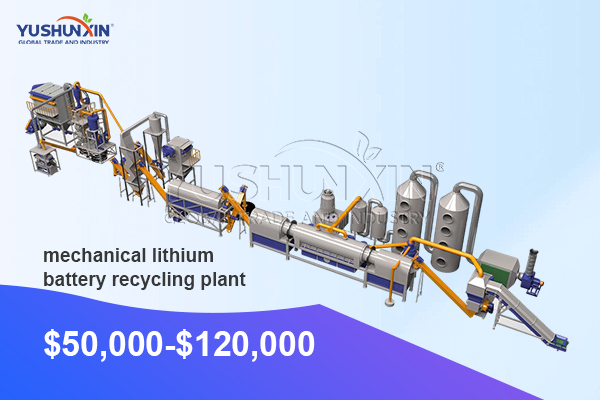
The first upgrade adds a second shift, because additional operating hours increase output without new capital spending. The second upgrade adds buffer hoppers between stages, and those hoppers absorb short stops of individual machines. The third upgrade adds a parallel module at the limiting stage, and that module raises the capacity of the whole line. A lithium battery recycling plant configuration with modular equipment makes each of these steps possible without rebuilding the building.
How do you plan capacity growth for a recycling company?
Growth planning starts with a three year collection forecast that separates vehicle packs, consumer packs and production scrap. A black mass processing line for battery recyclers then reserves space, power and cooling capacity for the next module, and that reservation avoids a second civil works campaign. Your finance team compares the cost of incremental capacity with the revenue of the additional material, and that comparison sets the timing of each step. The plant layout also keeps a maintenance bay free, because a line that stops for repair loses more output than any capacity upgrade recovers.
Conclusion for recycling companies and plant engineers
Capacity grows when the plant team measures the real constraint, removes that constraint and repeats the cycle. An e-waste and pyrolysis solution team that supplies layout studies, equipment upgrades and training helps your company raise output without a shutdown of the existing line. The lithium-ion battery remains the dominant chemistry, and that dominance gives your capacity plan a stable technical basis. If your engineering team needs a reference layout for the next phase, you can learn more about https://solutionsforewaste.com/lithium-battery-recycling-plant/ before the next upgrade decision.