
An investor who proves one photovoltaic recycling site often wants to repeat the model in other provinces, and that repetition fails when each plant is designed from scratch. A turnkey solar silver recovery solution project becomes repeatable when the design uses one standard configuration with a defined capacity range. You, as a project investor or as a regional development manager, then duplicate the same process instead of funding a new engineering effort at every location.
Which elements should stay standard across sites?
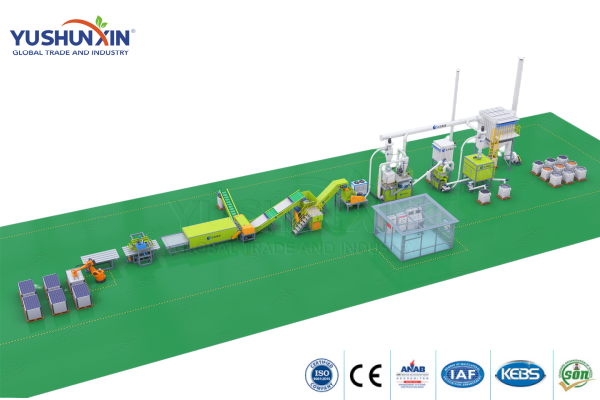
The process flow, the equipment list and the control philosophy stay standard, because those elements carry the engineering knowledge of the first plant. The civil design adapts to the local ground and building regulations, and that adaptation belongs to the local contractor. A multi site solar silver recovery roll out also keeps the acceptance test identical, so the performance of every site is comparable. Your project office issues one technical specification for all locations.
How do you adapt the standard design to local conditions?
The module mix changes between regions, because some markets use larger modules with thicker frames. The power supply and the water availability change the utility design, and the emission rules change the gas cleaning scope. A modular solar panel recycling plant solution allows the investor to select a capacity that suits the local collection volume while keeping the same core equipment. Your engineering team documents those local adjustments for every site.
How do you procure equipment for several plants?
A framework agreement with the equipment supplier covers several units, and that agreement improves both the price and the delivery priority. A scaling PV recycling across multiple sites plan also standardises the spare part inventory, because one warehouse can serve several plants. Your procurement office then schedules the deliveries to match the construction sequence of each location, and that sequence keeps the cash requirement predictable.
How do you operate a network of recycling plants?
The network uses one operating manual, one maintenance schedule and one reporting format, and that consistency reduces the training effort for every new team. The central office analyses the performance of each site monthly, and that analysis identifies the location that needs support. Sound standardization also allows the investor to move experienced operators between sites, and that mobility protects the output during the start up of a new plant.
Conclusion for project investors and development managers
A repeatable design turns one successful plant into a regional network with predictable cost and predictable performance. A multi site PV recycling advisors team that supplies standard specifications, layout drawings and commissioning support shortens the delivery of every following site. A network structure also improves the negotiation position with equipment suppliers and with buyers of recovered silver, and that improvement supports the return of the whole programme. If your team needs a reference for the standard configuration, you can learn more about https://www.spdsx.com/product/solar-panel-recycling-line/ before the next expansion decision. The network also shares one spare part warehouse, and that sharing lowers the inventory that each site must hold. A common reporting format then allows the investor to compare locations on one page.