
A custom solar silver recovery solution for a municipality or an industrial park differs from a utility-scale plant because the supply is smaller, the site is tighter and the permit belongs to a public body. You, as a municipal planner or as a park operator, examine the custom solar silver recovery solution against the module volume that the area generates. The design that fits that volume serves the community without an oversized capital commitment.
Which capacities fit a municipal project?
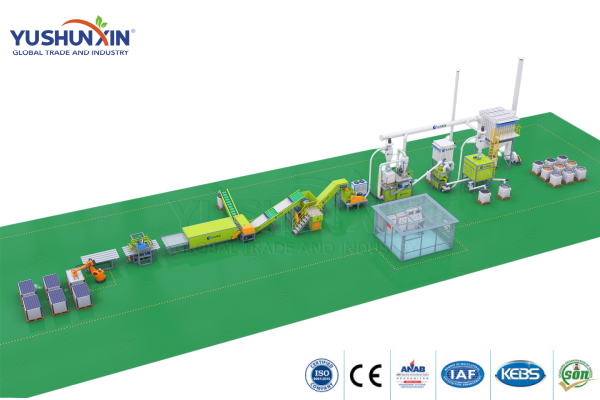
A municipal programme usually collects between a few hundred and a few thousand tonnes of modules each year, and that range points to a compact line. A municipal solar silver recovery project therefore favours a modular design that can grow with the supply. You compare two capacities against the collection plan, and the comparison shows the utilisation that each one reaches. The chosen capacity then matches the real flow.
How does a park-level project differ?
An industrial park that hosts several photovoltaic installations can aggregate the modules of its tenants, and that aggregation supports a larger line. A park-level silver recovery solution also shares the utilities of the site, and that sharing reduces the capital. You sign an agreement with the tenants before the order, and that agreement secures the supply. The park then operates one plant for several users.
Which package fits the public budget?
A silver recovery package for municipal projects includes the pre-treatment, the extraction circuit and the training, and that scope can be phased over two fiscal years. You phase the civil works so that the building serves both stages. The public budget then spreads the cost without delaying the start. The plant reaches production in the first phase.
How does the programme measure the benefit?
The tonnage diverted, the material delivered to the local industry and the emission avoided form the three indicators that the public body reports. You require the operator to submit those figures each year, and that reporting duty keeps the benefit visible. The park also measures the space that the plant saves at the disposal site. The next phase then receives approval with evidence. The municipality also includes the plant in its annual waste report, and that inclusion supports the application for the following grant. The operator then presents the same figures to the park tenants, and the tenants renew the service agreement with a clear view of the cost.
Conclusion for municipal planners and park operators
A custom solution fits a public project when the capacity matches the local supply and the package can be phased inside the budget. A municipal pv recycling advisors team that supplies the volume survey, the phased package and the reporting template helps the programme build a plant that lasts. The volume of end-of-life modules keeps rising, and the municipality that plans early avoids the disposal cost that grows later. If your team needs a reference for the line configuration and the project scope, you can learn more about https://www.spdsx.com/product/solar-panel-recycling-line/ before the next planning review.