
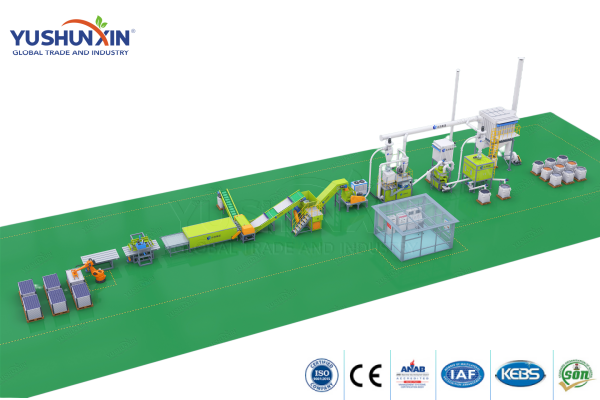
A pv recycling solution investment covers the shredder, the separation deck, the dust control and the site works, and the payback depends on the module supply and the value of the recovered fractions. You, as a project investor or as a recycling company manager, examine the pv recycling solution investment with a capital budgeting model before the order. The model then shows the year in which the plant returns the capital.
Which items form the investment cost?
The equipment package, the civil works, the utility connection and the working capital form the four blocks of the budget. An investment cost of a pv recycling solution review separates the blocks, because a supplier quotation rarely covers the site work. You price each block with a local quotation, and that choice keeps the estimate honest. The total then becomes a number that the board can compare.
How does the module supply change the payback?
The plant needs a steady flow of modules, and that flow decides the utilisation of the line. A pv recycling line payback model tests a conservative utilisation, because a new plant rarely reaches full load in the first year. You secure a supply agreement before the order, and that agreement protects the assumption. The model then reflects the real market.
What decides the revenue of the plant?
The glass, the aluminium, the copper and the silver concentrate form the four products that the plant sells, and each of them follows a local price. A payback of a pv recycling solution calculation also includes the gate fee that the operator charges for the modules. You value each stream with a real quotation, because a theoretical buyer does not pay the invoice. The revenue line then reflects the market.
How does the investor test the model?
A conservative case with a low material price and a high downtime shows the weakest result, and that case defines the risk that the investor accepts. You compare the result with a reference plant, and the comparison reveals an optimistic assumption. The model also tests the interest rate. The board then approves the project with a documented margin.
Conclusion for project investors and recycling companies
The investment cost and the payback of a pv recycling solution follow the capital, the utilisation and the material price, and a conservative model protects the decision. A pv recycling funding advisors team that supplies the cost table, the mass balance and the sensitivity analysis helps the investor present a case that the bank accepts. The volume of end-of-life modules keeps rising, and a plant with a verified payback attracts capital more easily. If your team needs a reference for the line configuration and the investment scope, you can learn more about https://www.spdsx.com/product/solar-panel-recycling-equipment-cost/ before the next investment review. The same model also supports the application for a green credit line, and that document shows the lender that the plant recovers the capital within the tenor of the loan and the warranty period. The owner then negotiates a longer tenor with evidence.