
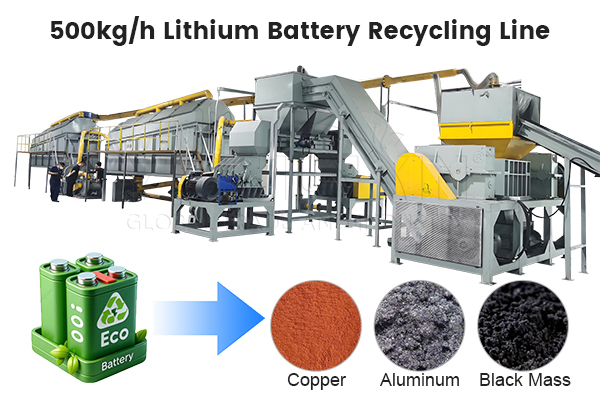
Black mass separation is one of the most important steps in lithium battery recycling. After waste lithium batteries are discharged, dismantled, shredded and separated, the valuable electrode powder can be collected as black mass. This material usually contains lithium, nickel, cobalt, manganese, graphite and other active materials. For recycling companies, efficient black mass separation is not only about recovery rate. It also affects material purity, downstream refining cost and the commercial value of the final product.
Why Black Mass Separation Matters
Lithium batteries contain different materials, including steel shells, aluminum foil, copper foil, plastic separators, electrolyte residues and electrode powder. If these materials are not separated properly, metal impurities may enter the black mass. This can reduce the quality of the recovered powder and increase the difficulty of later hydrometallurgical processing.
Therefore, a stable black mass separation process helps recyclers improve resource recovery and reduce unnecessary material loss. It also makes the whole lithium battery recycling line more suitable for industrial-scale operation.
Key Steps in Efficient Black Mass Separation
The process usually starts with safe battery discharge and pretreatment. After that, the batteries enter a crushing or shredding system. The purpose is to open the battery structure and release the internal electrode materials.
Then, the crushed material goes through screening, magnetic separation and air separation. Screening helps separate fine black mass powder from larger metal and plastic pieces. Magnetic separation removes iron and steel materials. Air separation can help remove light plastic films and separator materials. In some production lines, gravity separation or fine classification may also be used to improve purity.
A good system must also include dust collection and sealed conveying. Black mass powder is fine and easy to fly, so dust control is important for both material recovery and workplace safety.
What Affects Separation Efficiency?
Several factors directly affect black mass separation efficiency. Battery type is one of them. Cylindrical batteries, pouch cells and prismatic batteries may require different feeding and crushing designs. The moisture level, electrolyte residue and particle size also influence the separation result.
Equipment configuration is another key factor. If the crusher produces too many mixed particles, later separation becomes harder. If the screening system is not precise enough, valuable powder may remain in the coarse fraction. Therefore, the whole line should be designed as an integrated system, not just a group of single machines.
Choosing the Right Black Mass Separation Equipment
For industrial lithium battery recyclers, the best solution should match raw material type, processing capacity, safety requirements and final product targets. A complete lithium battery recycling line can include discharge equipment, shredding system, crushing system, screening machine, magnetic separator, air separator, dust collector and control system.
YUSHUNXIN can provide customized lithium battery recycling equipment according to project conditions. With a well-designed black mass separation system, recyclers can recover valuable battery materials more efficiently and build a more practical recycling business. Visiting: https://www.sxlbp.com/technology/black-mass-separation-process-in-lithium-battery-disposal/
Leave a Reply