
Industrial parks host rooftop arrays, storage systems and manufacturing lines that retire photovoltaic modules every year, and you, as a park operator or as a recycling company working with the park, can convert that stream into recovered glass, aluminium, copper and silver. A solar silver recovery solution design defines the collection scheme, the treatment line and the reporting method that the park needs for its circular economy targets. The solar silver recovery solution design then turns an environmental obligation into a measurable resource recovery result.
Which circular economy indicators does a park report?
The park reports the mass of modules collected, the share of material returned to production and the avoided landfill volume. Those three indicators appear in annual environmental reports and in the sustainability statements of the tenants. A circular economy goals for solar panel recycling review also defines the target recovery rate for glass and metals, and that target guides the equipment selection. Your park office then measures the same figures that the tenants publish, and that consistency supports the credibility of both reports.
How do you design the collection scheme inside the park?
A collection point near the maintenance yard keeps handling cost low and allows the park to consolidate modules before treatment. The scheme defines the acceptance criteria, the documentation for each delivery and the storage conditions. An industrial park PV recycling programme design also schedules the dismantling campaigns with the tenants, so the transport runs full and the labour stays productive. Your coordinator records every delivery in one register, and that register supports the annual report.
Which equipment configuration matches the park volume?
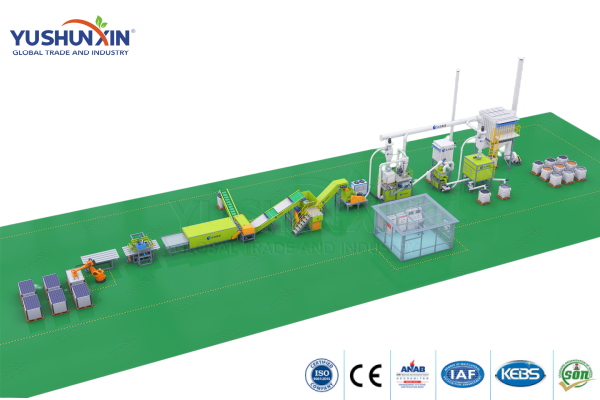
A line with dismantling, thermal delamination, crushing and separation recovers the main fractions, and that configuration fits a park that collects several hundred tonnes each year. The PV recycling programme cost structure shows how the capacity of each stage changes the investment, and that structure helps the park compare a shared facility with an outsourced service. Your engineering team confirms the available floor space and the power supply before the order. Treatment equipment with enclosed conveying keeps dust away from the neighbouring tenants.
How do you finance and operate the programme?
The park funds the service through a gate fee that tenants pay per tonne, and that fee replaces part of the external disposal cost. The revenue from glass, aluminium, copper and silver concentrate reduces the net cost of the programme, and the park publishes that result. Your operating team trains on the line before the first campaign, and the training protects both the recovery rate and the safety record of the site.
Conclusion for park operators and recycling companies
Circular economy goals become measurable when the park collects, treats and reports its photovoltaic waste inside one documented programme. A circular economy PV recycling partner that supplies process data, layout drawings and commissioning support helps the park reach its recovery targets in the first year. A functioning circular economy also keeps valuable metals inside the region, and that retention supports local industry. If your team needs a reference for the programme design and the equipment scope, you can learn more about https://www.spdsx.com/product/solar-panel-recycling-line/ before the next planning meeting.