
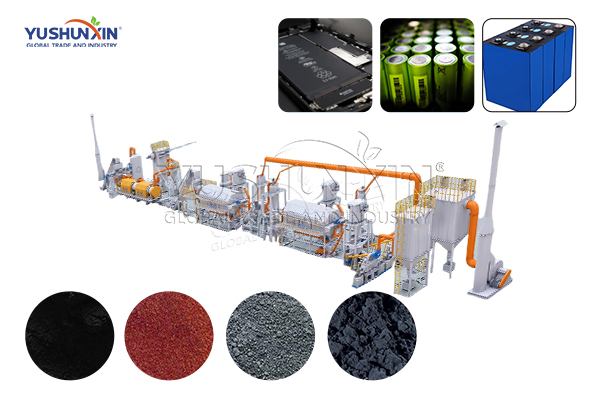
A battery recycling line behaves differently with each input, because consumer cells, electric vehicle packs, production scrap and stationary modules carry different casing, chemistry and state of charge, and you, as a recycling company manager or as a plant engineer, match the waste stream to the equipment before the order. A dry process lithium battery recycling line removes electrolyte and moisture before mechanical separation, and that sequence suits feed with residual charge and mixed chemistry. The dry process lithium battery recycling line then produces a cleaner black mass fraction with lower moisture.
Which waste streams suit a dry process line?
Production scrap from cell manufacturing arrives clean and dry, so it suits the process with minimal pretreatment. Consumer battery packs require dismantling and discharge before the shredder, because mixed cells carry mechanical risk. Electric vehicle modules need a dedicated station for pack opening, and that station defines the labour requirement of the shift. Your engineer tests each stream on a sample scale, and that test shows the recovery rate that the line achieves.
How does the state of charge change the process design?
A module with residual voltage requires safe discharge or inert atmosphere protection, and that protection changes the equipment specification. A battery material recycling line feedstock selection study records the typical state of charge of the incoming material, and that record defines the safety concept. The dryer then removes moisture that enters with wet storage, and the moisture level affects the separation efficiency. Your quality team measures the moisture of the black mass before the material leaves the site.
How does chemistry affect the recovered value?
Nickel rich chemistry delivers higher value per tonne, because the recovered manganese, nickel and cobalt content supports a stronger price. Iron phosphate chemistry carries lower metal value, so the economics depend on the gate fee and on the volume. Your commercial team tracks the chemistry mix of the incoming stream and adjusts the sales contract, and that adjustment protects the margin. The waste stream selection for battery recycling then decides which chemistry dominates the plant load.
How do you keep the line flexible?
A modular mechanical lithium battery disposal line allows the plant to process several streams with the same core equipment, and that flexibility protects the utilisation rate. Your team adds a dedicated station when one stream grows, and that addition avoids a redesign of the whole plant. Storage and segregation rules keep the streams separate, and that separation supports both safety and quality.
Conclusion for recycling companies and plant engineers
The best waste stream is the one that matches the process, the safety concept and the local market for the recovered fraction. A battery recycling line feedstock advisors team that supplies sample test data, layout drawings and commissioning support helps your plant reach its design recovery rate. A correctly designed line also keeps the valuable metals inside the supply chain, and that circulation supports the economics of the project. If your team needs a reference for the feedstock assessment and the equipment scope, you can learn more about https://www.sxlbp.com/products/500kg-h-lithium-battery-recycling-plant-for-sale/ before the equipment order.