
Investors ask for a cost figure before they ask for a technical drawing, and you, as a project developer or as a recycling company manager, answer that question with a breakdown that separates equipment from civil works, utilities and working capital. The black mass recovery process investment covers the discharge station, the shredder, the mill, the dryer, the separation modules and the dust collection system. The black mass recovery process investment also includes the laboratory, the storage area and the operator training that the plant requires before production.
Which items belong in the equipment budget?
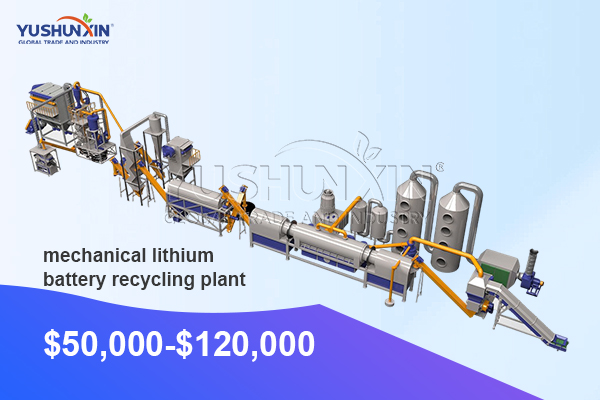
The core equipment covers the discharge and dismantling station, the shredder, the hammer mill, the rotary dryer and the density separator. The separation package includes magnetic separation, screening and the fine fraction handling system. The environmental package includes the dust collector, the air monitoring instruments and the wastewater treatment step. Your engineering team lists each item with its capacity, and that list becomes the basis of the tender.
Which items belong outside the equipment budget?
The civil works cover foundations, the process hall, the storage yard and the utility connections, and that group often represents a fifth of the total. The permit work covers the environmental assessment and the hazardous material registration. A black mass recovery plant cost estimate also includes the working capital for the first months of scrap purchase and salaries, and that amount protects the project during the ramp up. Your finance team reserves a contingency for site conditions.
How do the process choices change the investment?
A mechanical route with crushing, drying and separation needs a moderate investment and reaches stable operation quickly. Adding a hydrometallurgical stage raises the capital cost and the technical complexity, and that stage pays back only when the plant secures a steady supply of clean black mass. The black mass separation process cost drivers show how the particle size target and the moisture limit change the equipment list. Your team compares both routes with the same feedstock.
How do you phase the investment?
A phased plan buys the pretreatment and separation package first, and that stage generates revenue from copper, aluminium and black mass while the second stage is designed. A black mass project investment planning schedule then links each phase to a financing milestone, and that link keeps the cash requirement predictable. The plant layout reserves space for the second stage, and that reservation avoids a rebuild.
Conclusion for project developers and recycling companies
A transparent cost breakdown allows the investor to compare quotations on one basis and to plan the financing with realistic figures. A black mass project investment advisors team that supplies capacity data, layout drawings and commissioning support shortens the preparation period. Phasing the investment also protects the project during the ramp up year, and that protection improves the return on the capital already spent. If your team needs a reference for the cost structure of 2026 projects, you can learn more about https://www.sxlbp.com/products/lithium-battery-recycling-machine-cost/ before the budget meeting. A cost estimate that states its assumptions also allows the investor to update the model when the market moves, and that flexibility protects the decision during the financing period.