
Regional plans set collection targets for batteries, and those targets become realistic only when a treatment facility exists inside the region, so you, as a municipal programme manager or as a recycling investor, match the processing capacity to the volume that the plan actually collects. The lithium battery recycling equipment investment follows that capacity decision, because the discharge station, the shredder, the dryer and the separators scale together. The lithium battery recycling equipment investment then defines the gate fee that the programme needs to cover its cost.
How do you estimate the regional volume?
The forecast combines vehicle registrations, consumer electronics sales and industrial production data, and each source delivers a different pack size. A regional plan also includes the collection rate that the authority expects, because the treatment capacity must match the collected volume rather than the generated volume. Your analyst builds a five year projection with a conservative growth rate. The processing capacity for regional battery recycling then follows the middle scenario of that projection.
Which capacity fits a municipal programme?
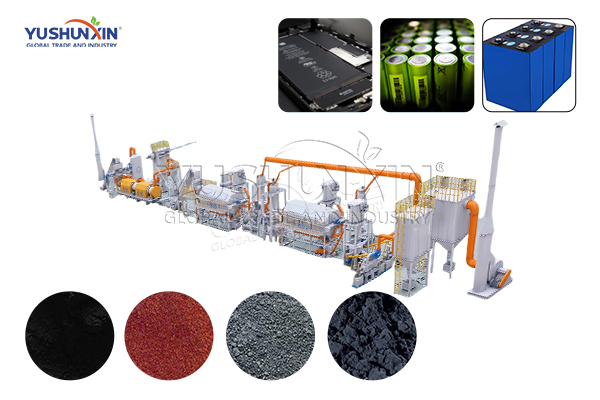
A line of five hundred kilograms per hour suits a region that collects consumer packs and small industrial batteries, because that capacity covers a growing volume with one shift. A 1000 kg/h lithium battery disposal project fits a region with vehicle battery flows and a second shift plan. Your engineering team calculates the annual tonnage of each option and compares it with the collection forecast, and that comparison shows the option that avoids idle capacity. The battery recycling capacity selection for regions also reserves space for a future module.
How does capacity affect the economics of the programme?
Fixed costs such as labour, maintenance and monitoring spread over the processed tonnage, so a plant that runs at high utilisation charges less per tonne. Revenue from copper, aluminium and black mass improves the balance, and the gate fee covers the remaining gap. A regional facility also avoids long distance transport of hazardous waste, and that avoidance reduces both cost and risk. Your finance team presents the comparison to the council with the collection forecast attached.
How do you connect the plant to the regional plan?
The plant becomes part of the collection infrastructure, so the plan defines the transfer stations, the documentation and the reporting duties of the operator. The authority receives a monthly report on collected and processed tonnage, and that report demonstrates the progress of the municipal solid waste target. Your programme office reviews the report with the operator, and the review keeps both parties aligned.
Conclusion for municipal programme managers and recycling investors
Capacity selection decides whether a regional plant operates at its design rate or carries idle cost for years. A battery recycling capacity advisors team that supplies collection data, layout drawings and commissioning support helps the authority choose the right size. A plant that matches the collected volume also strengthens the credibility of the regional battery programme, and that credibility supports future funding. If your team needs a reference for the capacity options, you can learn more about https://www.sxlbp.com/products/500kg-h-lithium-battery-recycling-plant-for-sale/ before the council decision.