
When investors compare pyrolysis projects, they often focus on equipment price first. However, the total investment depends on much more than the reactor itself.
A plastic-to-oil project and a tire pyrolysis project may use similar thermal conversion principles, but their feedstock preparation, product handling and auxiliary systems can create different project costs.
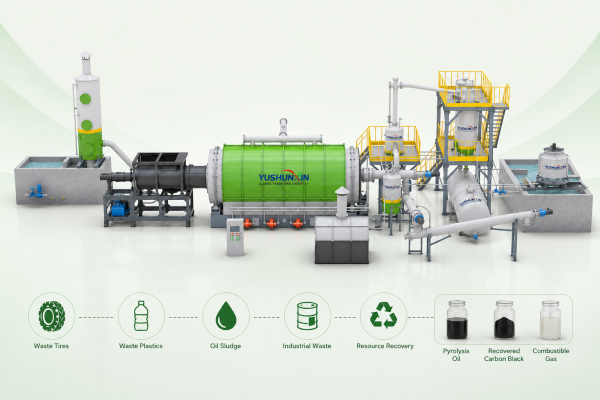
Why Does Feedstock Change Project Cost?
The first cost difference comes from the raw material condition.
Plastic feedstock usually requires sorting, cleaning and size preparation before pyrolysis. PE and PP-rich plastics may have good oil potential, but mixed plastics need additional evaluation because PVC, PET and impurities can affect equipment configuration.
A customer evaluating a plastic to oil plant cost should consider:
- Feedstock composition
- Pretreatment requirements
- Daily processing capacity
- Product application
A cleaner and more stable feedstock normally allows a simpler process route.
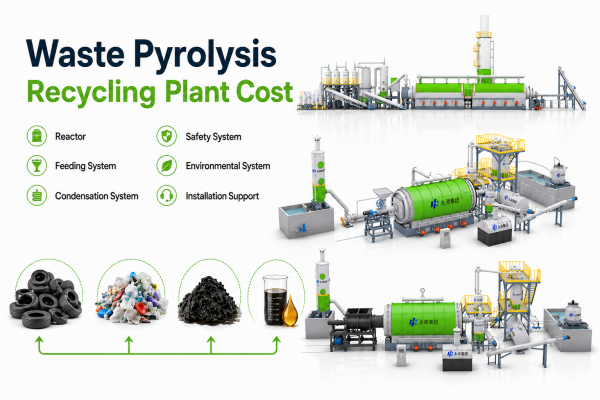
Why Can Tire Pyrolysis Require Different Investment?
Waste tires have different challenges.
Large tires, steel wires and rubber characteristics influence feeding, pretreatment and discharge design. A commercial project may need tire cutting, wire removal or specific feeding solutions depending on the material condition.
Therefore, cost factors in tire pyrolysis projects include not only the reactor but also:
- Tire preparation equipment
- Feeding system design
- Carbon black handling
- Steel separation
The final configuration depends on the customer’s actual tire supply and production target.
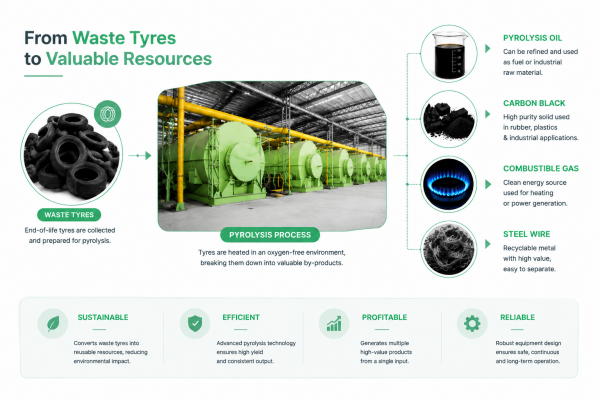
Which Equipment Factors Influence Pyrolysis Investment?
Beyond raw material preparation, several equipment factors affect the project budget.
Important factors include:
- Batch, semi-continuous or continuous operation mode
- Processing capacity
- Condensation system design
- Environmental protection equipment
- Installation requirements
A detailed pyrolysis equipment price factors evaluation helps buyers understand why different projects may have different quotations.
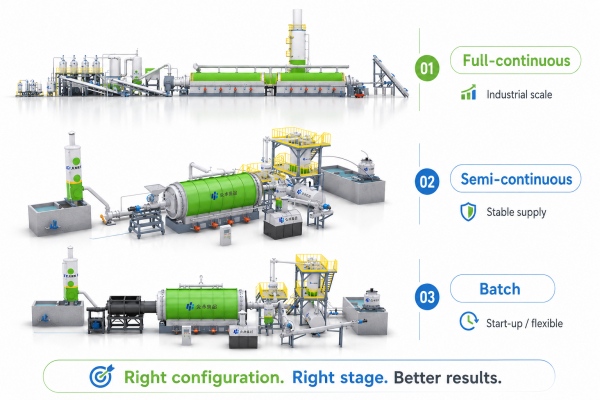
How Should You Compare Different Pyrolysis Projects?
A reliable comparison should start from the complete project scope instead of a single machine price.
Before selecting equipment, confirm:
- What material will be processed?
- How stable is the daily supply?
- What products are expected?
- What local environmental requirements apply?
Yushunxin evaluates pyrolysis projects based on feedstock characteristics, processing requirements and complete system configuration to help customers select a suitable technical route.
Leave a Reply