
As electric vehicles, energy storage systems, and consumer electronics continue to grow, lithium battery recycling has become an important business opportunity. A hydrometallurgical lithium battery recycling plant is designed to recover valuable metals from spent lithium batteries, especially from black mass, which contains lithium, nickel, cobalt, manganese, graphite, and other battery materials. For recyclers, battery manufacturers, and environmental investors, this process helps turn hazardous waste into reusable resources.
Henan Yushunxin Technology Heavy Industry Co., Ltd. specializes in the research and production of solar panel and lithium battery recycling equipment, providing equipment solutions for environmental recycling projects.
What Is Black Mass Recovery?
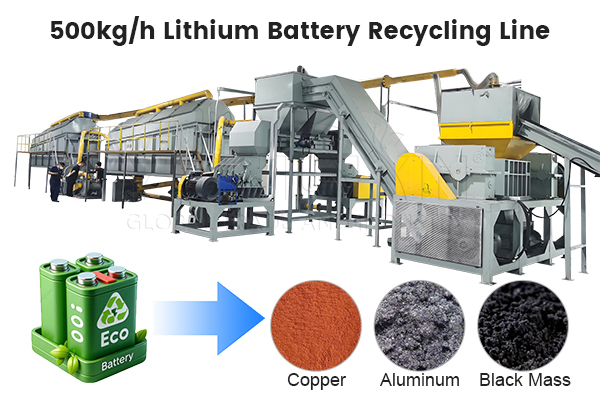
Black mass is the fine powder obtained after spent lithium batteries are discharged, dismantled, crushed, and physically separated. It usually comes from cathode and anode materials. Because it contains high-value metals, black mass is the core material for deep recycling. Mechanical recycling can separate copper, aluminum, plastic, and shells, but hydrometallurgy is needed to further extract valuable metals from black mass.
How Does a Hydrometallurgical Recycling Plant Work?
A typical hydrometallurgical lithium battery recycling plant includes several key stages. First, the black mass is prepared and fed into the leaching system. Then, suitable chemical solutions are used to dissolve valuable metals into liquid form. After that, impurity removal, filtration, extraction, precipitation, and crystallization steps are used to separate target metals.
Through this process, lithium, nickel, cobalt, and manganese can be recovered in the form of salts or intermediate products. These recovered materials can be supplied to battery material producers or further refined for battery-grade applications.
Why Choose Hydrometallurgy for Lithium Battery Recycling?
Compared with simple crushing and separation, hydrometallurgical recycling offers higher recovery value. It is especially suitable for NMC, LCO, and other batteries containing high-value metals. For investors, the biggest advantage is that the plant does not only sell mixed black mass, but can upgrade it into higher-value metal products.
At the same time, a well-designed system should include wastewater treatment, acid mist control, sealed reaction equipment, and automatic control. These systems help improve operating safety and reduce environmental risk.
What Should You Consider Before Building the Plant?
Before purchasing a hydrometallurgical lithium battery recycling plant, you should confirm your raw battery type, black mass composition, daily processing capacity, target final products, local environmental standards, and available plant area. Different battery chemistries require different process designs, so the solution should not be copied directly from another project.
Build a Profitable Battery Recycling Business
A complete lithium battery recycling solution can combine mechanical pretreatment with hydrometallurgical extraction. This helps recyclers recover both physical materials and valuable metals. If you plan to process spent EV batteries, energy storage batteries, or black mass, a customized hydrometallurgical lithium battery recycling plant can help you improve recovery value, meet environmental requirements, and build a more sustainable recycling business. Visiting:https://www.sxlbp.com/technology/hydrometallurgical-lithium-battery-recycling-plant/
Leave a Reply